
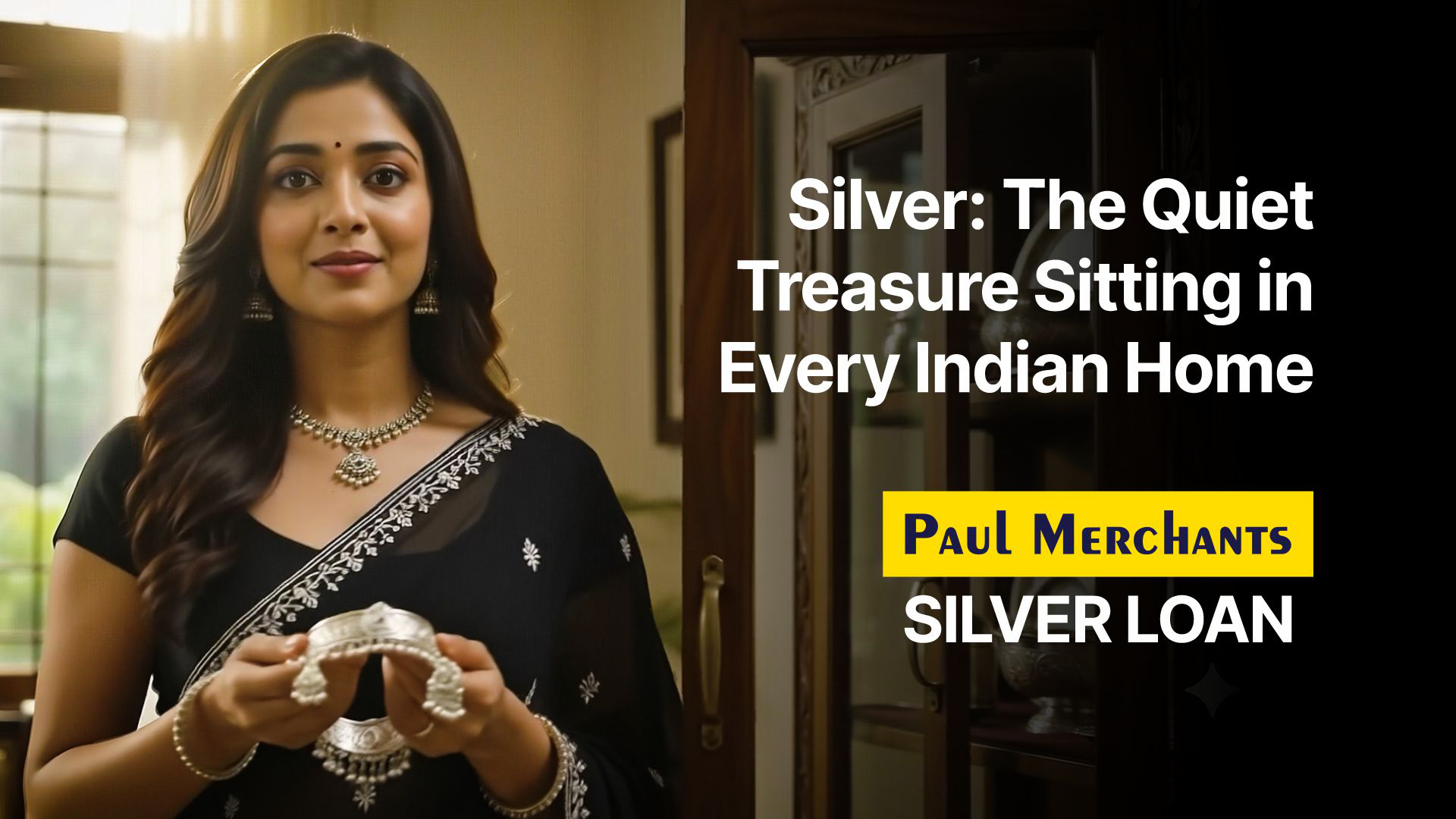
Silver: The Quiet Treasure Sitting in Every Indian Home
Silver: The Quiet Treasure Sitting in Every Indian Home
By Rajneesh Bansal, Managing Director – Paul Merchants Ltd
21st August, 2026
Walk into almost any Indian household, a village home in Uttar Pradesh, or a middle-class flat in a metro city, and you will find silver. Not locked away in a bank vault, it lives quietly in everyday life: anklets passed down from a grandmother, toe rings worn at every wedding, a small silver glass every newborn drinks from and coins gifted each Diwali tucked away in a steel almirah ever since.
For generations, silver has been simply a part of the household, a rituals, and a family. And yet, without anyone calling it out, this silent accumulation has made India sit at the very centre of the global silver story.
India's Enormous, Often-Overlooked Silver Wealth
The numbers are staggering once you look at them:
- - India is the world's second-largest market for physical silver investment, accounting for nearly 80% of global demand for silver bars and coins.
- - India is also the world's largest consumer of silver jewellery and silverware by volume more than any other country on the globe
- - Much of this wealth sits with lower and middle-income households, particularly in rural India, which together are estimated to hold around 29,000 tonnes of silver in jewellery and another 4,000 tonnes in coins.
Silver has always occupied a special place in rural wealth. Unlike gold, its price point has made it accessible and affordable enough for everyday families to buy, save, and pass down. That accessibility is exactly why it shows up everywhere: in anklets, toe rings, children's ornaments, bowls, glasses, and utensils that sit in kitchens and cupboards across the country, forming a store of value that rarely gets counted in conversations about household savings.
How India Consumes Its Silver, State by State
This appetite for silver isn't spread evenly; it has a character of its own in every region. Looking at 16 major states, representing roughly 85% of India's population and set against the country's baseline annual silver consumption of nearly 7,000 tonnes, a clear pattern emerges: silver demand is driven as much by culture and ritual as it is by income.
| State |
Annual Consumption (Tonnes) |
Per-Capita (g/person/year) |
Key Driver |
|
Uttar Pradesh |
~989 |
~4.1 |
Festival demand (Dhanteras) |
|
Rajasthan |
~820 |
~10.5 |
Silverware traditions, local mining |
|
Gujarat |
~720 |
~10.1 |
Urban trading hub (Ahmedabad) |
|
Maharashtra |
~680 |
~5.4 |
High-income retail + industrial use |
|
Madhya Pradesh |
~490 |
~5.7 |
Rural bars as inflation hedge |
|
Bihar |
~440 |
~3.3 |
Silver over gold, lower cost |
|
West Bengal |
~410 |
~4.0 |
Artisanal filigree, festive gifting |
|
Punjab |
~230 |
~7.2 |
High-income luxury utensils, coins |
|
Haryana |
~210 |
~6.9 |
Agricultural wealth into silver bars |
|
Tamil Nadu |
~190 |
~2.5 |
Gold-biased, lower silver demand |
|
Karnataka |
~170 |
~2.6 |
Electronics industry + urban jewellery |
|
Andhra Pradesh |
~160 |
~3.0 |
Rural household savings |
|
Telangana |
~120 |
~3.1 |
Hyderabad retail jewellery |
|
Odisha |
~110 |
~2.3 |
Cuttack silver filigree work |
|
Kerala |
~40 |
~1.1 |
Gold-prioritised market |
|
Assam |
~30 |
~0.9 |
Small, traditional-item demand |
The pattern is telling. States like Rajasthan and Gujarat combine cultural depth with genuine purchasing power, pushing per-capita consumption well above the national average.
States like Uttar Pradesh and Bihar show that even with lower per-capita numbers, sheer population size makes them enormous silver markets in absolute terms.
And across the agricultural belt Punjab, Haryana, Madhya Pradesh silver continues to double as both a tradition and an inflation hedge, exactly the kind of household wealth that has, until now, stayed locked away rather than put to use.
From Locker to Liquidity: A New Way to Use Silver
For decades, this silver largely stayed exactly where it was safe, sentimental, but silent. It couldn't easily be turned into money without selling it outright, which most families were reluctant to do given its emotional and generational value.
That has now changed. The Reserve Bank of India has formally allowed regulated lenders banks, NBFCs, and cooperative banks to extend loans against silver jewellery, ornaments, and coins, just as they long have against gold. For the first time, silver sitting in family lockers can be pledged for a loan instead of sold, unlocking funds for a wedding, an education, a medical need, or a business, without giving up the metal itself.
Paul Merchants: India's First NBFC to Offer Exclusive Silver Loans
At Paul Merchants, we saw this opportunity early. As India's first NBFC to launch an exclusive silver loan product, we built a way for households to convert their silver jewellery, coins, and household silverware into funds that can move their dreams forward.
Whether it's ₹2,000 for a small, urgent need or ₹15 lakhs for something bigger a wedding, an education abroad, a business expansion, or a medical emergency you can walk in with the silver that's already yours, get it valued transparently, and walk out with a loan that fits your need. No need to sell or break sentimental pieces down for cash.
Just your silver, working for you, while remaining yours.
Your Silver Can Work for You Too
Silver in Indian homes has done its job for eternity as savings, as security, as tradition passed from one hand to the next. It never stopped being valuable; it simply never had a way to be put to work without being given up.
That chapter has changed with Paul Merchants' exclusive silver loans, the anklets, coins, and utensils sitting in your home today can become the bridge to your family's next big milestone while the silver itself, and everything it means to you, stays exactly where it belongs: with your family.
Your silver has always been a treasure. Now, it can also be an opportunity.
To Know More, Call Now: 95010-10999
Press Release Links